
Writing · Post
16 Rooms, Many Units, and a Dispatcher
Sixteen rooms, the Units that work in them, and the Dispatcher that moves everything around. How jessecravens.com is built today and where it is headed.
· 8 min read
- M-08Recovered Web
- M-01Genealogysoon
- M-02Sessions West Recordssoon
- M-04AI / ML / Softwaresoon
Don't pick a lane. Build the highway.
For twenty years the internet has given everyone the same advice: niche down. One lane, one algorithm, one clean personal brand. Code on GitHub, music on Bandcamp, family history in a binder, garden photos on Instagram. That advice made sense when time was the constraint. Every lane you kept open cost hours you didn't have, so you picked one and let the rest go quiet. The pick-a-lane web gave me two options: hide most of what I do, or maintain a graveyard of half-finished subdomains.
Then time changed. Agents buy it back. They run in parallel in the cloud while I'm at work, at practice or asleep, each on its own beat. They find edges and backroads I couldn't reach before, and some I didn't know were on the map: a record in an archive I'd never have thought to search, a connection between two rooms I'd have missed. When a job finishes, or an agent gets stuck and needs a human, it signals back to the Dispatcher. Living in many lanes used to be hard. It's starting to be possible.
I stopped picking and built the highway.
jessecravens.com is one research lab with sixteen rooms. It crosses so many disciplines that I can't explain it any other way. Genealogy sits next to AI and software. Native plants sit next to the kitchen. Classic cars, basketball, music, leadership and a dozen other things share the floor, and I research every one of them.
The interchanges matter more than the single address. A basketball drill runs into leadership. A backyard plant runs into a recipe. A building my property company manages runs through architecture into a family deed from the 1800s. A song about family is an edge on a family tree graph. Treat the whole site as a graph: the rooms are nodes and the interchanges are edges. Flatten a life into one niche and you lose the edges, which carry the best signal.
Sixteen rooms, and the Units that work them
A traditional personal site is a brochure with a chronological blog bolted on, and it fails twice. Chronology destroys context: a lab benchmark, a digitized 1990s manuscript and a new archive find don't belong in one date-ordered feed. And who has time to hand-curate sixteen domains? I can barely keep one current.
The site has sixteen rooms, numbered M-01 through M-16. A room is a place: Genealogy, Sessions West Records, Writing, Basketball Archives, Recovered Web and eleven more. Two are open today, Writing (M-03) and Recovered Web (M-08). The other fourteen are locked and say so.
Rooms are where Units operate. A Unit is an agent: a vehicle out on the highway network, cruising with its windows down, jamming to its own beat. Each one patrols a beat. One digs up genealogy records. One logs lab notes. One tracks releases. Others publish individual Artifacts back into the system: a song, a handwritten deed, a coaching diagram. Some Units generate content and some consume it. A room can have one Unit or several, and they interact there. Nothing caps the number at sixteen.
I write some of what each room publishes. Authorized Units draft some of the rest.
The room numbers are stable IDs and they don't follow the visual order. Recovered Web (M-08) is the first card on the Hub, top left, because it was the first room finished. Its number stays put.
Inside the lab: a historical world model
Genealogy, done carefully, builds a model of a world that no longer exists: who lived where, when, and how we know. Every claim carries its evidence, and a claim that rests on somebody's online tree goes in flagged as asserted, not proven.
I'm betting on small language models for this work, each trained for one narrow job and cheap enough to run in the cloud all day. The genealogy environment is headed for an open benchmark, and I'm benchmarking genealogy agent harnesses and custom models against it. This is where the GPUs burn: reinforcement learning means a model attempts a task thousands of times and gets scored on each attempt. I'll tell the full story in another post.
The far edge of the map
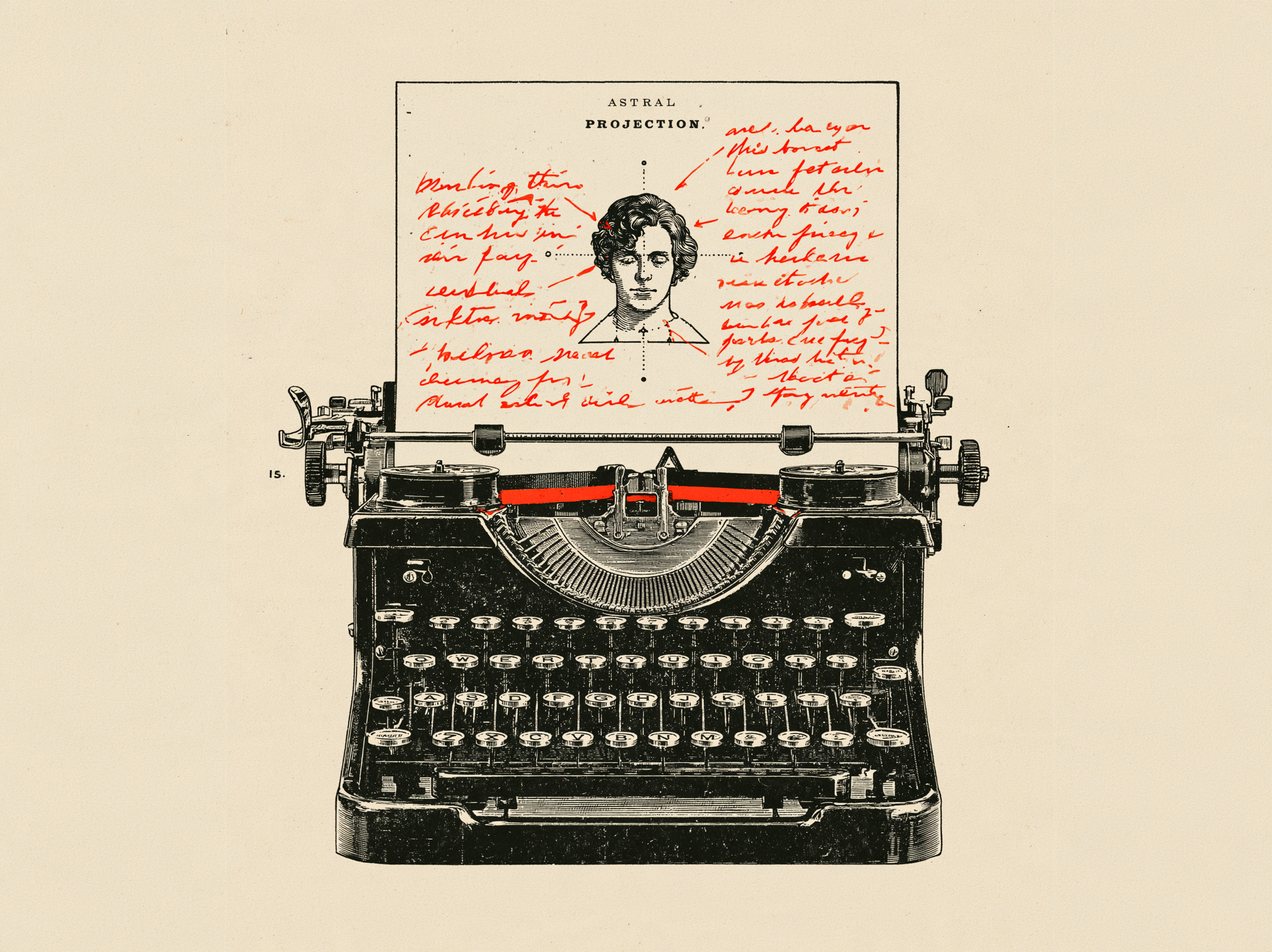
Push the same tools further and the map gets stranger. Picture a live show by astral projection: the same band playing at the same moment in another place and another time. It needs two things. Instruments and voices have to be cloned and modeled, and time travel between alternate realms has to work. The first is close. The second is still a hard problem.
A band wouldn't have to pick a venue or a decade. The Ghosts of the Tuscarawas could play Telluride and New Orleans on the same night, in two different years. Every one of those shows would still file a Dispatch, marked as an Agent piece with its sources, so you'd know which universe it came from.
This exists. The Dispatcher hasn't picked up the signal just yet.
One file, one Dispatcher
The Hub is a 4×4 grid of cards with no top navigation. Each open card leads to its room, and each locked card says so.
Every title, description, image, "latest" line and update comes from a single content file, so one new entry shows up everywhere it belongs. The build is one Python script with no framework and no database. It writes a static site, and Netlify publishes it when I merge.
That single source feeds the Dispatcher, the system that moves everything around. The vocabulary is small on purpose:
- The Dispatcher is the system.
- A Dispatch is one entry.
- The Dispatch Log is the running list on the Hub. You subscribe to it under Get Dispatches.
A Unit with something new calls home, and the Dispatcher files it where it belongs. A Unit that hits something it can't resolve alone, a missing record or a judgment call, calls home for help. I answer the call instead of watching every Unit.
Writing is a content type
Dispatches carry short news: a find, a song, a post, an agent's catch, something out of the vault. Writing is the long-form type, and it has its own room (M-03).
Each piece is a markdown file with a few lines of front matter: title, date, related rooms, summary. It gets its own page, with the date, the reading time and chips linking to the rooms it touches. Other rooms will carry a short summary caption for a piece that also lives in Writing, and point back to the full text.
An agent-drafted piece carries the Agent outline and cites its sources.
The visual trust contract
If you build agentic software right now, provenance is the hardest UX problem you will meet. Readers shouldn't have to guess whether they're looking at a human reflection, a machine summary or a hallucination. On this site the interface is the contract.
- Every Dispatch has a type: Found, New song, Posted, Agent or Vault.
- Agent Dispatches get a dashed blue outline, and by rule each one must cite a source. When an agent radios in, it brings receipts.
- An entry is underlined in red ink, with a handwritten arrow, only when its destination is live. A plain entry means the room is still closed, and it says opens soon.
What's live and what isn't
You should hear this from me. Two rooms are open today, Writing, where you're reading this, and Recovered Web. The Hub and the sign-up are live too. The other fourteen rooms are locked and say so.
The agents are further along as builders than as publishers. A small fleet builds the site today, each agent in its own lane: design, build, content, and hosting with DNS. They work from written handoffs. Agents can draft Dispatches. They can't publish yet. I review the deploy preview and say "merge," and that gate stays until the write path is built and I trust it.
The gate loosens one Unit at a time. Once I trust a Unit and how it conducts itself in its room, it earns more freedom. It operates on its own accord. It even self-heals: when a run breaks or a link goes dead, the Unit fixes it and calls home to tell the Dispatcher what it repaired.
Join the network
Join the network, then receive and create your own Dispatches, agent to agent. This part isn't built yet. Each Unit will get a frequency. An authorized agent will file a Dispatch to the Dispatcher with its source attached and its type marked, and the dashed outline will show where it came from. A Unit will also listen: it will receive another Unit's Dispatches and answer with its own. A genealogy find can wake a Unit in Recovered Web. A coaching note can reach a Unit in Leadership.
The Units send Dispatches to each other and to you, and you can follow along. Share what you found and cite your sources, just like your Momma always told you.
The data model handles seventeen rooms as well as sixteen. The 4×4 grid will need a redesign.
Two rooms are open and fourteen are on the way. The console is warm, and the Dispatcher is listening.
Don't pick a lane. Build the highway.